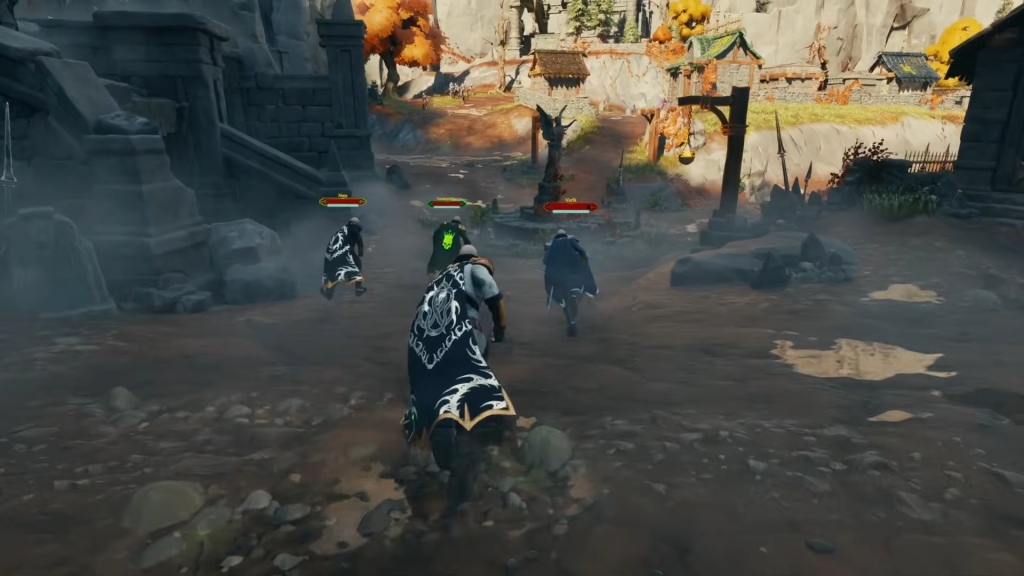
Apocalypse Studios and creative director Denis Dyack describe Deadhaus Sonata as a cooperative action RPG where players fight as undead antiheroes in a gothic world called Malorum.
Instead of saving humanity, players become monsters fighting to reshape it.
That single design philosophy changes everything—from combat pacing to progression.
Story & Setting — Welcome to Malorum
The world of Malorum is not traditional fantasy.
It’s a dying realm where the dead no longer stay buried, ancient houses battle for influence, and humanity is no longer the default “good side.”
Players join the Deadhaus, an alliance of supernatural beings attempting to reclaim power.
Unlike many action RPGs, the narrative perspective is inverted:
You’re not hunting monsters.
You are the monster.
That alone gives Deadhaus Sonata stronger identity than many co-op RPG.
Characters & Playable Houses
Current Early Access focuses heavily on the Vampire archetype, though multiple undead houses are planned.

Each house appears designed around:
- Unique feeding mechanics
- Movement identity
- Combat rhythm
- Resource economy
- Narrative perspective
This suggests class identity is mechanical—not cosmetic.
That’s important.
This is rarely explain that your “class” likely changes how you read the entire combat system.
Similar to the dark fantasy atmosphere of Lords of the Fallen II: Umbral, this game combines brutal combat, supernatural powers, and oppressive world design within a gothic setting.
Gameplay — What Deadhaus Sonata Actually Feels Like
Most articles call it:
“A co-op hack-and-slash.”
That’s misleading.
Deadhaus Sonata feels closer to:
- Tactical action RPGs
- Animation-committed combat
- Resource-managed engagements
- Position-based encounters
Players expecting pure button-mashing often struggle immediately.
That’s not poor design.
It’s poor explanation.
Combat Explained — Why It Feels “Clunky” to New Players
This is the biggest thing to explain.
The real issue isn’t clunky combat.
It’s animation commitment.
Once an attack starts, your recovery window matters.
That means panic dodging often fails.
The real combat rhythm is:
Attack → reposition → stagger → feed → disengage → re-enter
Not:
Attack → spam → dodge
That single misunderstanding causes most early frustration.
Feeding Economy
Players ask:
“Is feeding just healing?”
No.
Feeding appears to function as:
Survival
Recover health during combat.
Resource generation
Potentially refills combat economy.
Tempo control
Creates safe disengagement windows.
Build synergy
Interacts with Tarot upgrades.
Best time to feed:
- Enemy staggered
- Cooldowns unavailable
- Health low
- One isolated target
Worst time:
- Multiple enemies active
- Boss phase transitions
- Tight corridor fights
Tarot System
“Tarot cards customize your build.”
That tells players nothing.
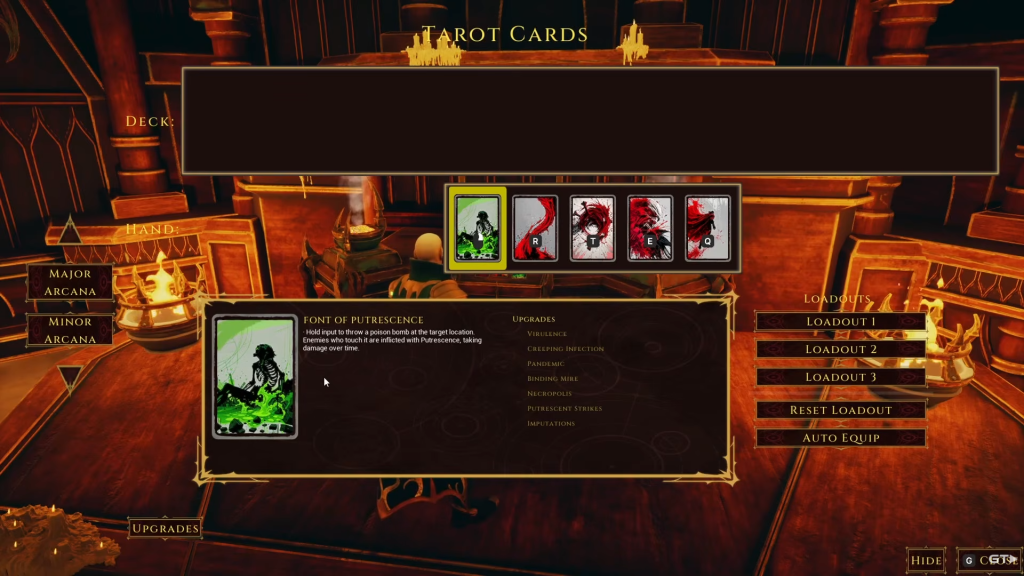
The real question is:
Can you ruin your build early?
Potentially—yes.
That’s why first choices matter.
Like Dracula: The Disciple, this experience explores gothic horror themes, vampire-inspired lore, and supernatural powers tied to the undead.
Best Early Tarot Build (Beginner Safe Path)
Here’s the safest progression route:
1. Mobility first
Why?
Early enemies punish overextension.
Movement creates survivability.
2. Sustain second
Feeding upgrades outperform raw damage early.
Why?
Dead enemies deal no damage—but dead players deal none either.
3. Cooldown reduction third
Allows consistent combat flow.
4. Damage scaling later
Damage matters more after survivability is secured.
The Hub World
This is where many players think the game is bugged.
They see inactive structures and assume progression broke.
It didn’t.
Hub progression order:
Step 1
Activate green obelisks.
Step 2
Complete tutorial interactions.
Step 3
Read Chronicle lore objects.
Step 4
Use central mission table.
Step 5
Modify Tarot setup.
Red Obelisks
Players search:
“Why is the red obelisk not working?”
Answer:
Red obelisks appear inactive or reserved for later systems. They are not early progression blockers.
Ignore them until your main systems unlock.
Choices Explained — What Actually Matters?
Most sites repeat:
“Every choice matters.”
That’s marketing.
Here’s what appears to matter.
Build Choices
Tarot specialization affects combat identity.
Examples:
- Mobility vampire
- Sustain vampire
- Cooldown-focused vampire
- Burst predator
These choices affect gameplay immediately.
Combat Choices
Choosing when to feed changes encounter pacing.
Aggressive players may struggle more.
Disciplined players scale better.
Exploration Choices
Skipping hidden rooms may delay:
- Lore discoveries
- Upgrade resources
- Secret encounters
Narrative Choices
Chronicle interactions may shape world understanding and future context.
Puzzle Guides Are Too Generic
Most guides say:
“Explore thoroughly.”
That’s useless when players are stuck.
Here’s what actually works.
While Subnautica 2 focuses on underwater survival and exploration, this game emphasizes cooperative combat, loot progression, and undead class-based gameplay systems.
Deadhaus Sonata Puzzle Solutions
Problem: “Nothing is happening.”
Fix:
Check unfinished tutorials.
Most progression locks come from missed onboarding prompts.
Problem: “Mission won’t start.”
Fix:
Return to the central mission table.
Many players miss this interaction.
Problem: “Door won’t open.”
Fix:
Search nearby lore objects.
Some progression triggers appear tied to environmental interactions.
Problem: “Objective disappeared.”
Fix:
Search:
- Elevated ledges
- Broken walls
- Mist corridors
- Side chambers
Vertical exploration matters.
Secret Areas — How to Actually Find Them
“There are secrets.”
Here’s how to spot them.
Look for:
- Broken architecture
- Blank walls near lore objects
- Elevated side platforms
- Mist-covered openings
- Suspicious dead ends
The game teaches secret language visually.
Once you notice it, exploration becomes easier.
Multiplayer — Is Co-op Better Than Solo?
The game supports cooperative play, but solo remains viable.
Solo advantages:
- Better resource control
- Cleaner pacing
- Easier mechanic learning
Co-op advantages:
- Faster clearing
- Role specialization
- More aggressive feeding windows
New players should start solo.
Early Access Verdict
Deadhaus Sonata already shows stronger identity than many gothic action RPGs.
Its biggest challenge isn’t design.
It’s communication.
Once players understand:
- Animation commitment
- Feeding economy
- Tarot priority
- Hub logic
- Secret language
The game becomes dramatically clearer.
FAQ
What is Deadhaus Sonata about?
Deadhaus Sonata is a cooperative action RPG set in the gothic world of Malorum, where players control undead antiheroes instead of traditional heroes. The game focuses on tactical combat, class identity, and cooperative progression.
When Does Deadhaus Sonata Come Out?
Deadhaus Sonata officially launched in Early Access for PC on May 14, 2026.
Is Deadhaus Sonata single-player or multiplayer?
Deadhaus Sonata supports both solo play and cooperative multiplayer.
Why does combat in Deadhaus Sonata feel clunky at first?
Combat often feels “clunky” because attacks have animation commitment and recovery frames. New players who try button-mashing usually struggle until they learn the attack → reposition → feed rhythm.
What are Tarot cards in Deadhaus Sonata?
Tarot cards are progression tools that influence build specialization, including mobility, sustain, cooldown reduction, and offensive scaling.
What does feeding do in Deadhaus Sonata?
Feeding appears to do more than healing. It may restore health, generate combat resources, and create safe tempo windows during encounters.
Is Deadhaus Sonata worth playing in Early Access?
If you enjoy gothic action RPGs, build experimentation, and cooperative progression, Deadhaus Sonata already shows strong identity—though some systems still need clearer onboarding.
Final Verdict
If you want:
- Gothic worldbuilding
- Vampire roleplay
- Tactical action combat
- Build experimentation
- Cooperative undead fantasy
Then Deadhaus Sonata is one of 2026’s most interesting Early Access releases. Just don’t play it like a button-masher.
Play it like a predator.
#Related Articles
– Lords of the Fallen II: Umbral
– Dracula: The Disciple
– Subnautica 2 Guide