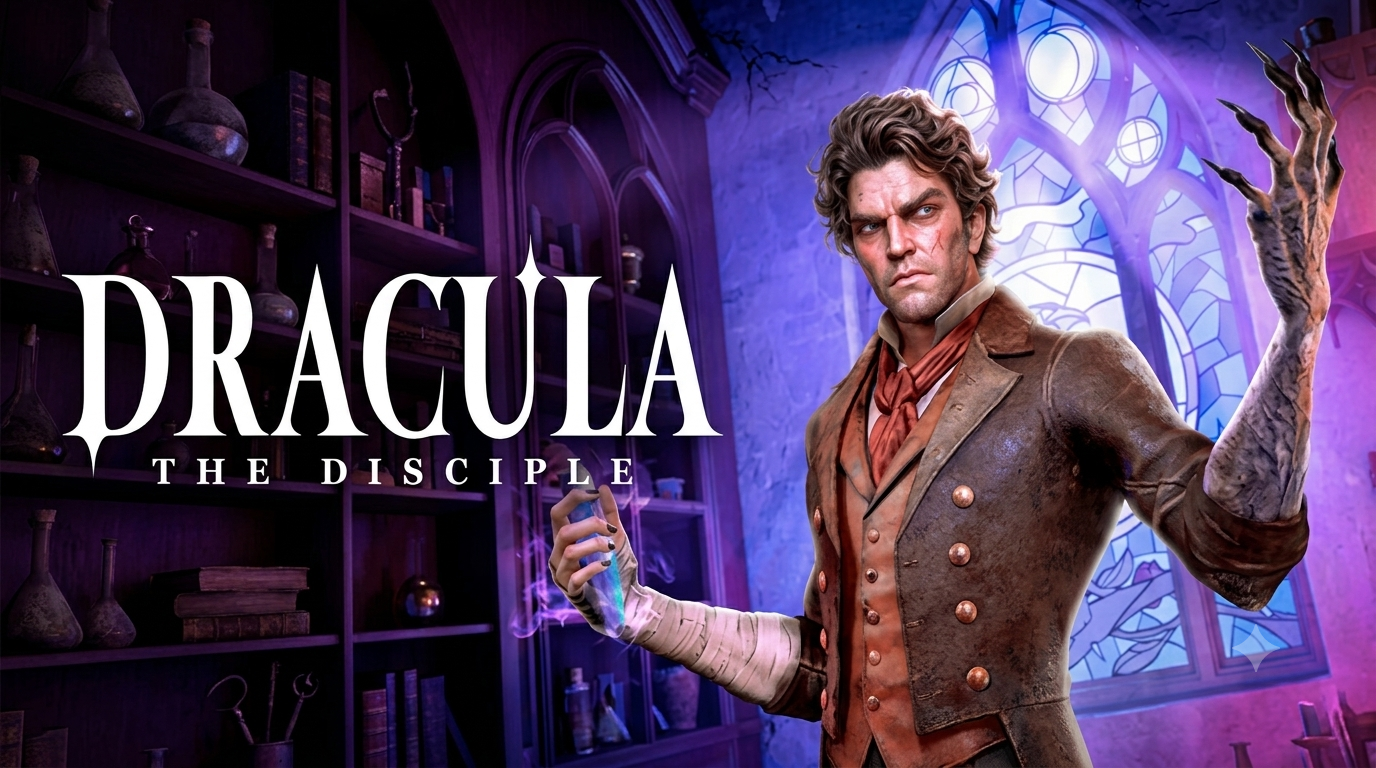
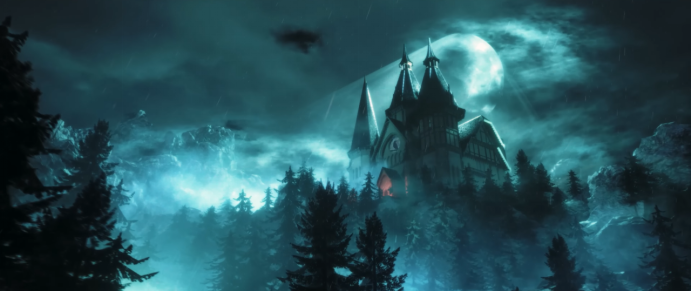
Dracula: The Disciple is one of the most intriguing upcoming horror games of 2027 — and it’s nothing like what you’d expect from a Dracula title. There’s no combat. No monster slaying. No holy water or wooden stakes. Instead, developer Cyanide Studio has built a slow-burning, first-person puzzle adventure set entirely inside Count Dracula’s abandoned gothic castle. If you’ve been searching for everything there is to know about Dracula: The Disciple — the gameplay loop, story premise, platforms, release window, and what makes it different — you’re in the right place. This guide covers it all, drawn directly from the official reveal at Nacon Connect 2026.
What Is Dracula: The Disciple?
Dracula: The Disciple is an upcoming first-person puzzle-adventure game developed by Cyanide Studio and published by Nacon. Announced at Nacon Connect 2026, the game is set to release in 2027 on PC (Steam), PlayStation 5, and Xbox Series X|S.
The developer has described the game as a “Puzzlevania” — a hybrid of classic puzzle-adventure design and the interconnected, exploration-heavy structure of Castlevania. It’s a notable genre pivot for Cyanide, best known for the stealth-action Styx trilogy and sports titles like Blood Bowl.
“Our goal was to allow players to truly interact freely with their surroundings. They will be able to pick up objects, inspect them, mix alchemical substances, and even draw occult rituals themselves.” — Antoine Cazayus, Game Director, Cyanide Studio
Like Subnautica 2, this experience uses isolation and environmental tension to create suspense, though within a gothic horror setting instead of an underwater world.
Dracula: The Disciple Story & Setting
Who Are You Playing As?
You play as Émile Valombres, a French archivist set in 1866 Transylvania. Émile is dying from a terminal illness with no medical cure in sight. Desperate, his research leads him deep into the Carpathian Mountains — to Count Dracula’s long-abandoned castle.
His goal isn’t to destroy Dracula. He came to learn from him. Dracula found a way to cheat death, and Émile wants those secrets.

The Castle as a Living World
The castle in Dracula: The Disciple isn’t just a backdrop — it’s the central character. Key environmental details include:
- Time-of-day cycles — the castle looks and behaves differently during the day versus at night, revealing new areas and secrets depending on when you explore
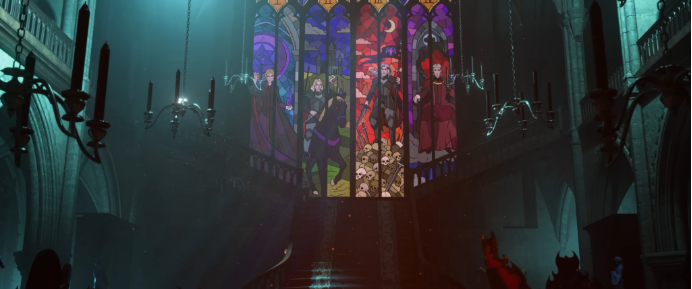
- Multiple distinct zones — drawing rooms, mysterious gardens, an alchemical laboratory, an astronomy tower, a greenhouse, and sinister dungeons
- Progressive unlocking — areas are locked off at first and only become accessible as Émile’s vampiric transformation advances
- Environmental storytelling — Dracula’s journals, correspondence, and experimental notes are scattered throughout, slowly reconstructing the Count’s history.
The Transformation Arc
Here is where Dracula: The Disciple takes its darkest turn. The cure Émile seeks comes at an irreversible cost: he begins transforming into a vampire. This isn’t a side effect — it’s the core narrative engine.
As the transformation deepens, Émile gains supernatural abilities that are required to progress. You don’t fight this change. You embrace it, which ultimately raises the central question of the game: how much of your humanity are you willing to sacrifice to survive?
Dracula: The Disciple Gameplay — How It Actually Works
First-Person Puzzle Adventure, Not a Horror Shooter
Let’s be clear: Dracula: The Disciple is not a combat game. The castle is abandoned. There are no enemies to fight, no creatures lurking in shadows to jump-scare you into a corner. The tension is entirely atmospheric and intellectual.
The core gameplay loop revolves around three interconnected pillars:
1. Exploration & Environmental Puzzles Players move freely through the castle’s interconnected rooms, searching for clues, interacting with objects, and deciphering the logic embedded in each area. Think less Resident Evil action, more Return of the Obra Dinn deduction.
1. Exploration & Environmental Puzzles Players move freely through the castle’s interconnected rooms, searching for clues, interacting with objects, and deciphering the logic embedded in each area. Think less Resident Evil action, more Return of the Obra Dinn deduction.
2. Alchemical Experimentation The laboratory is central to progression. Using tools like the alembic, decanter, and athanor, players combine elemental substances in pursuit of the legendary Philosopher’s Stone. There are no tutorials telling you the answer — you experiment, fail, and learn. Director Antoine Cazayus has explicitly said that “experimentation, logic, and deduction are truly at the heart of the experience.”
3. Occult Rituals & Greenhouse Cultivation Beyond alchemy, players must master occult ritual symbols, physically tracing them on the castle floor. The greenhouse adds another layer — growing plants with supernatural properties that feed into puzzles and crafting. These systems work together organically rather than existing in isolated minigames.
The “Puzzlevania” Structure
Cyanide Studio’s own term — Puzzlevania — best describes the game’s architecture. Like a Metroidvania, the map is interconnected and non-linear. Progress is gated not by combat skills but by knowledge and abilities acquired through transformation. The more Émile becomes a vampire, the more of the castle opens up. This creates a satisfying loop where revisiting old areas with new eyes (and new powers) reveals what was previously hidden.
Dracula: The Disciple — Platforms & Release Date
| Detail | Info |
|---|---|
| Developer | Cyanide Studio |
| Publisher | Nacon |
| Release Window | 2027 |
| Platforms | PC (Steam), PlayStation 5, Xbox Series X|S |
| Xbox Play Anywhere | Confirmed |
| Xbox Cloud Gaming | Confirmed |
| Genre |
First-Person Puzzle Adventure / “Puzzlevania” |
No exact release date has been confirmed as of mid-2026. A Steam page is already live, allowing players to wishlist the game.
A Note on Cyanide Studio’s Situation
One significant caveat worth knowing: both Cyanide Studio and publisher Nacon filed for judicial reorganization (insolvency proceedings) in early 2026. Nacon filed first in February 2026; Cyanide followed on March 23, 2026. France’s judicial reorganization process can take up to 18 months — meaning a court outcome could arrive as late as August 2027, the same window in which the game is scheduled to ship.
This doesn’t mean the game is cancelled, but it’s an honest uncertainty.
What Makes Dracula: The Disciple Different From Other Vampire Games
The vampire game genre is crowded. Here’s how Dracula: The Disciple carves out its own space:
- No combat whatsoever — rare for the genre, which almost always defaults to action
- Intellectual horror — dread comes from atmosphere and existential moral choices, not jump scares
- Alchemy as a core system — not just lore decoration but an actual mechanical puzzle layer
- Transformation as progression — your vampiric evolution is the upgrade tree, not a skill menu
- Grounded in Bram Stoker’s mythology — the game draws directly from classic Dracula lore, not modern reinterpretations
- Gothic realism — the visual style aims for historical gothic aesthetics of the 1860s, not stylized fantasy
For fans of games like Myst, The Room, Amnesia: The Dark Descent, or Call of Cthulhu (also by Cyanide), this is worth watching closely.
Similar to psychological horror experiences like Silent Hill: Townfall (2026), this game builds tension through atmosphere, unsettling environments, and narrative-driven suspense.
Cyanide Studio: The Developer Behind the Game
Cyanide Studio is a Paris-based French developer with a long history in niche genre games. While best known for:
- Styx: Master of Shadows and Styx: Shards of Darkness (stealth-action)
- Blood Bowl series (turn-based fantasy sports)
- Call of Cthulhu (2018, narrative horror RPG)
Dracula: The Disciple represents the studio’s most ambitious genre leap — a pure puzzle-adventure with no combat, built around an entirely atmosphere-driven experience. The Call of Cthulhu pedigree is relevant here: Cyanide has proven it can build oppressive, unsettling worlds rooted in literary horror.
FAQ
When is Dracula: The Disciple coming out?
The game is confirmed for a 2027 release window on PC, PS5, and Xbox Series X|S. No specific launch date has been announced. Wishlisting on Steam is available now.
What platforms will Dracula: The Disciple be on?
The game will launch on PC (Steam), PlayStation 5, and Xbox Series X|S. It also supports Xbox Play Anywhere and Xbox Cloud Gaming, meaning Xbox players can switch between console and PC seamlessly.
Is Dracula: The Disciple an open-world game?
Not exactly. It uses a Metroidvania-style interconnected map — the castle is one large, interlocking environment where areas unlock progressively as your vampire abilities grow. It’s non-linear but not an open world in the modern sense.
Is there combat in Dracula: The Disciple?
No. The game is a pure puzzle-adventure with no combat mechanics. The castle is abandoned, and enemies are not a factor. Progression is driven entirely by puzzle-solving, alchemy, exploration, and occult rituals.
Who develops Dracula: The Disciple?
The game is developed by Cyanide Studio (makers of Styx and Call of Cthulhu) and published by Nacon. Both companies are currently undergoing judicial reorganization proceedings in France as of 2026.
The Bottom Line : Should You Wishlist Dracula: The Disciple?
If you’re a fan of atmospheric puzzle games, gothic horror, and slow-burn narrative experiences — yes, absolutely. Dracula: The Disciple is positioning itself as something genuinely rare: a vampire game that trusts the player’s intellect over their reflexes. The “Puzzlevania” design, alchemical systems, and transformation-as-progression mechanic make it one of the more original takes on the Dracula license in years.
The uncertainty around Cyanide Studio’s financial situation is real and worth monitoring. But the core concept is strong, the atmosphere is compelling, and the genre gap it’s trying to fill is genuinely underserved.
#Related Articles
– Subnautica 2 Guide
– Silent Hill: Townfall (2026)
– Grave Seasons Guide