Iron Nest: Heavy Turret Simulator released August 6, 2026, Iron Nest is a first-person dieselpunk artillery sim built by a two-person indie team. You operate a 5,000-ton turret by hand reading radio intel, measuring a paper map, solving ballistics, loading shells, and cranking wheels until the barrel points exactly where the math says it should.
Below: what the gameplay actually involves, current pricing, system requirements, and the beginner tips that stop your first three shells from landing in an empty field.
What Is Iron Nest: Heavy Turret Simulator?
Iron Nest: Heavy Turret Simulator is a single-player simulation game that turns heavy artillery into a procedural puzzle. There’s no aiming reticle and no free camera. You sit inside a blind steel cabin and translate coordinates into a firing solution using physical instruments.
The Steam reception has been unusually strong for an indie sim: 99% positive across 1,600+ reviews in its opening days, with the free demo sitting near 99% across 4,100+ reviews.
The short version: it’s a procedure simulator wearing a war game’s coat.
Iron Nest Release Date, Price, and Where to Buy
| Detail | Info |
|---|---|
| Release date | August 6, 2026 |
| Base price | $19.99 USD |
| Launch discount | 25% off ($14.99) through August 20, 2026 |
| Platforms | PC — Steam, plus Epic and GOG |
| Demo | Free, permanently available |
| Languages | 16, including full interface localization |
You can grab it on the official Steam store page or through retailers like Green Man Gaming. The free Steam demo teaches the complete firing loop play it first. This is a game people either fall hard for or bounce off in ten minutes, and thirty minutes with the demo tells you which one you are.
How Iron Nest Gameplay Works: The Full Firing Chain
Every shot in Iron Nest follows the same sequence. Break one link and the shell lands somewhere embarrassing.
1. Read the Intel
Two teleprinters feed you information. One delivers top-priority directives from High Command; the other carries frontline traffic and spotter reports. Orders rarely arrive as clean waypoints you get raw bearings, partial grid references, and occasionally contradictions between the two channels.
Tip: read both printers before touching anything. Frontline chatter frequently corrects High Command.
2. Measure on the Tactical Map
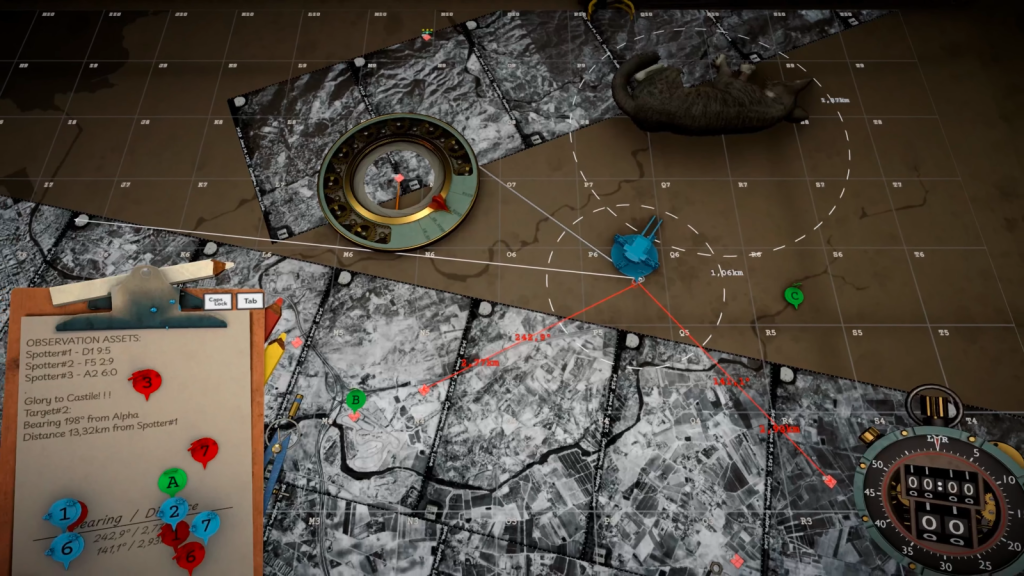
The map table is a gridded war board with rulers, protractors, movable tokens, and colored pencils. You locate your turret’s position, plot spotter bearings, and find where the lines intersect. That intersection is your target.
When coordinates are incomplete, triangulation does the work: two spotter bearings crossing at a provisional point, which you mark lightly until a second source confirms it.
3. Solve the Ballistics
Feed range and elevation into the ballistic calculator, then choose your propellant charge. More charge sends shells farther and flatter; less charge arcs them steeply into entrenched positions. Shell flight time is long enough that impatience is genuinely punished.
4. Load the Gun
Chamber the correct round, set powder bags on the rack, and work the rammer. Shell weight changes handling heavier rounds fight you harder during gunlaying.
5. Gunlay by Hand
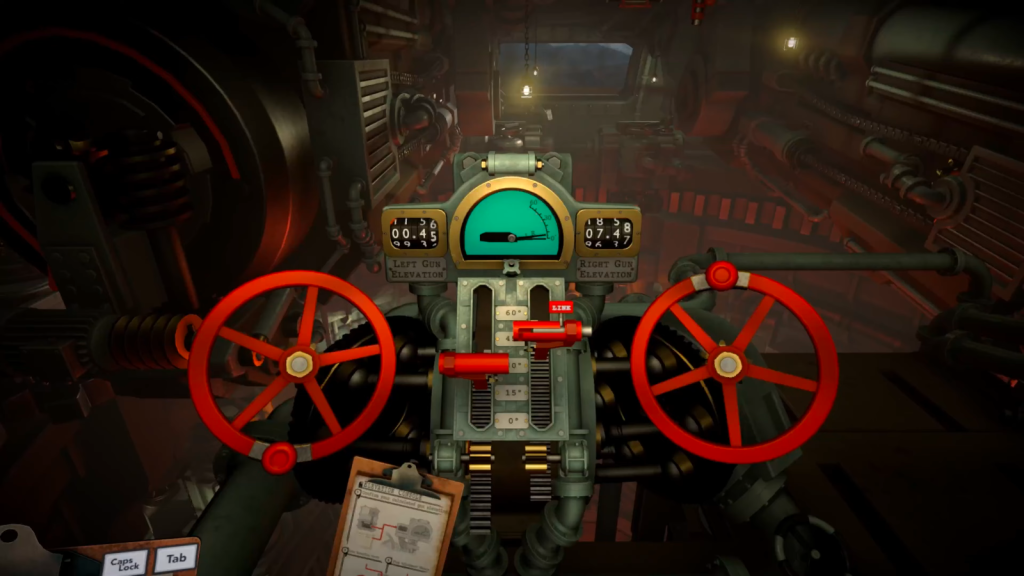
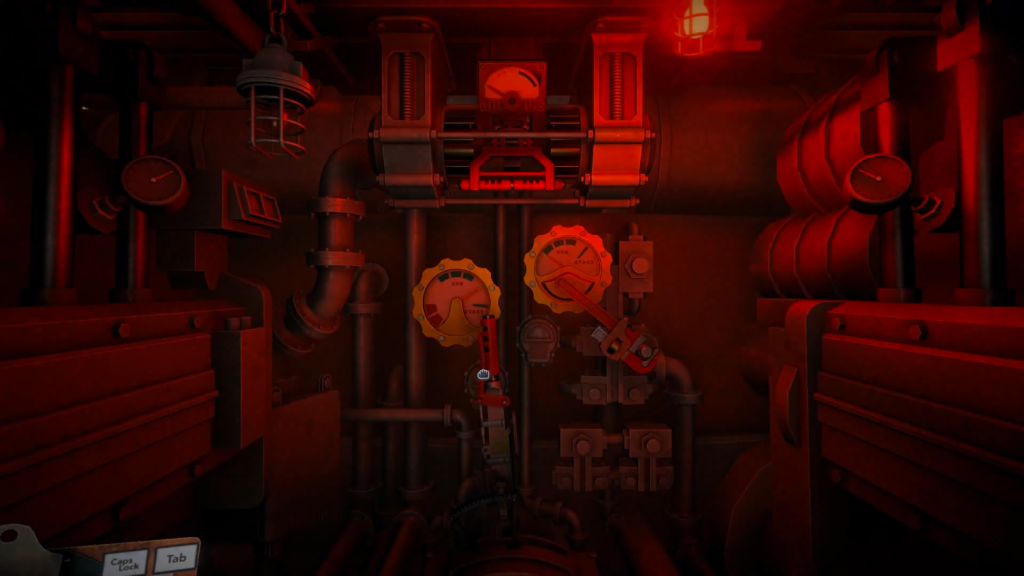
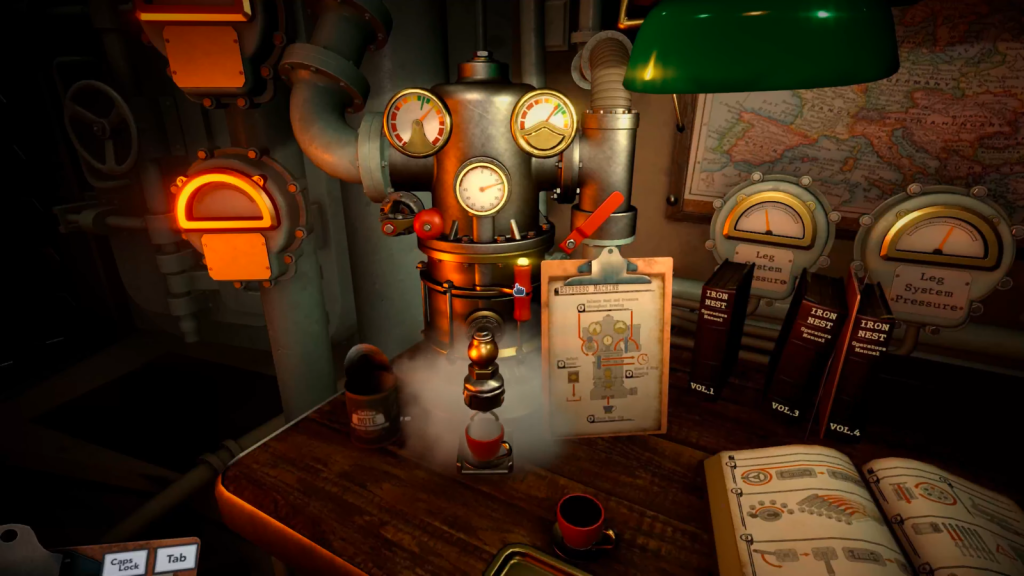
Traverse (horizontal azimuth) and elevation are manual handwheels. Ease into alignment with incremental adjustments rather than yanking; over-straining the hydraulics introduces drift. Swinging thousands of tons takes real time, and veteran operators use that window to prep the next round or make coffee, which is a genuine mechanic.
6. Fire, Then Correct
Most missions want a ranging shell first. Aerial recon photos come back showing impact relative to target, and you apply minute-of-angle corrections before committing to the main salvo. Walking rounds onto a target is the skill ceiling here, not reflexes.
Ammunition, Progression, and Replayability
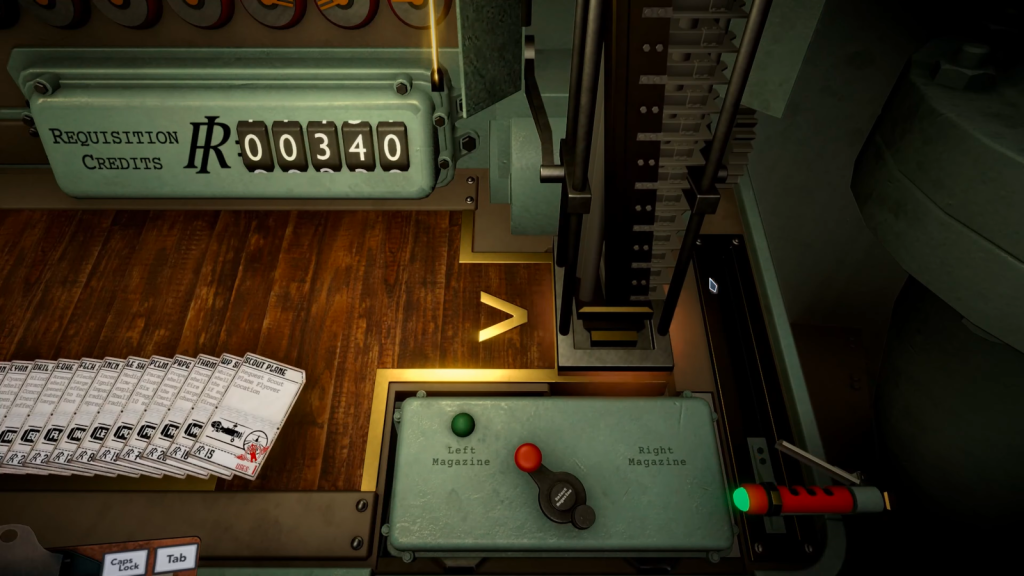
Iron Nest ships with roughly 30 unlockable ammo types and each has a job: armor-piercing for bunkers, high-explosive for soft targets, smoke to screen a friendly withdrawal, star shells to illuminate at night, and chemical rounds the game deliberately makes you feel bad about using.
Around that core sit 15 campaign regions, procedurally generated objectives, two challenge modes, leaderboards, 33 achievements, 100+ medals, and importantly a customizable cat companion.
Setting: Alternate-History Spain, Late 1920s
The campaign unfolds in an alternate 1920s Spain where the monarchy still holds power and a republican uprising is spreading. You’re the operator. High Command issues orders; you pull the levers. Newspaper reports between missions show what your shells did to the world outside your cabin, and the writing consistently refuses to let you off the hook.
Iron Nest System Requirements
Refreshingly light for 2026.
Minimum: Intel Core i5-4460 / AMD FX-8350 · 4 GB RAM · Intel UHD or AMD Vega 8 · DirectX 10 · 5 GB storage. Targets 30 FPS at 720p on low.
Recommended: Intel Core i5-8400 / AMD Ryzen 5 2600 · 8 GB RAM · GTX 1060 6GB or RX 580 8GB · 5 GB storage.
A laptop from 2016 will run this.
5 Beginner Tips for New Operators
- Write everything down. The in-game clipboard exists for a reason. Coordinates you “remember” are coordinates you get wrong.
- Verify before you fire. Cross-check the grid reference against a second source when radio traffic allows.
- Never rush the hydraulics. Incremental wheel adjustments beat aggressive correction every time.
- Match charge to arc. Wrong propellant with perfect coordinates still misses.
- Treat the demo as training. It covers the same loop with less pressure.
Who Should Play Iron Nest and Who Shouldn’t
Play it if you liked PVKK, enjoy immersive sims built on procedure, or find satisfaction in doing a complicated job correctly. The developers openly credit PVKK for shaping this genre.
Skip it if you want action. There is no spray-and-pray option, no movement, and no shortcut. The first hour is procedural, not twitchy and difficulty later comes from time pressure and incomplete intel, not tighter aim.
FAQ
Is there an Iron Nest: Heavy Turret Simulator demo?
Yes. The free Steam demo is permanently available and teaches the full intel-to-impact loop.
How long is Iron Nest?
The handcrafted campaign spans 15 regions, but procedurally generated objectives, challenge modes, and leaderboards extend it well past a single playthrough.
Is Iron Nest multiplayer?
No. It’s single-player only, with Steam Cloud, achievements, and Family Sharing support.
Is Iron Nest historically accurate?
It’s alternate history. The 1920s Spain setting is fictionalized, though the artillery procedures triangulation, ranging shells, MOA corrections mirror real gunnery practice closely.
Does Iron Nest run on Steam Deck?
Many players report playing primarily on Deck. The modest specs help, though the dense analog interface favors a mouse.
The Bottom Line
Iron Nest: Heavy Turret Simulator succeeds because it refuses to simplify. Reading the teleprinter, plotting the map, solving the ballistics, loading by hand, and correcting off recon photos each step is deliberate, and landing a shell after all of it earns a reaction few action games manage.
At $14.99 during the launch window, on hardware nearly anyone owns, the risk is close to zero.