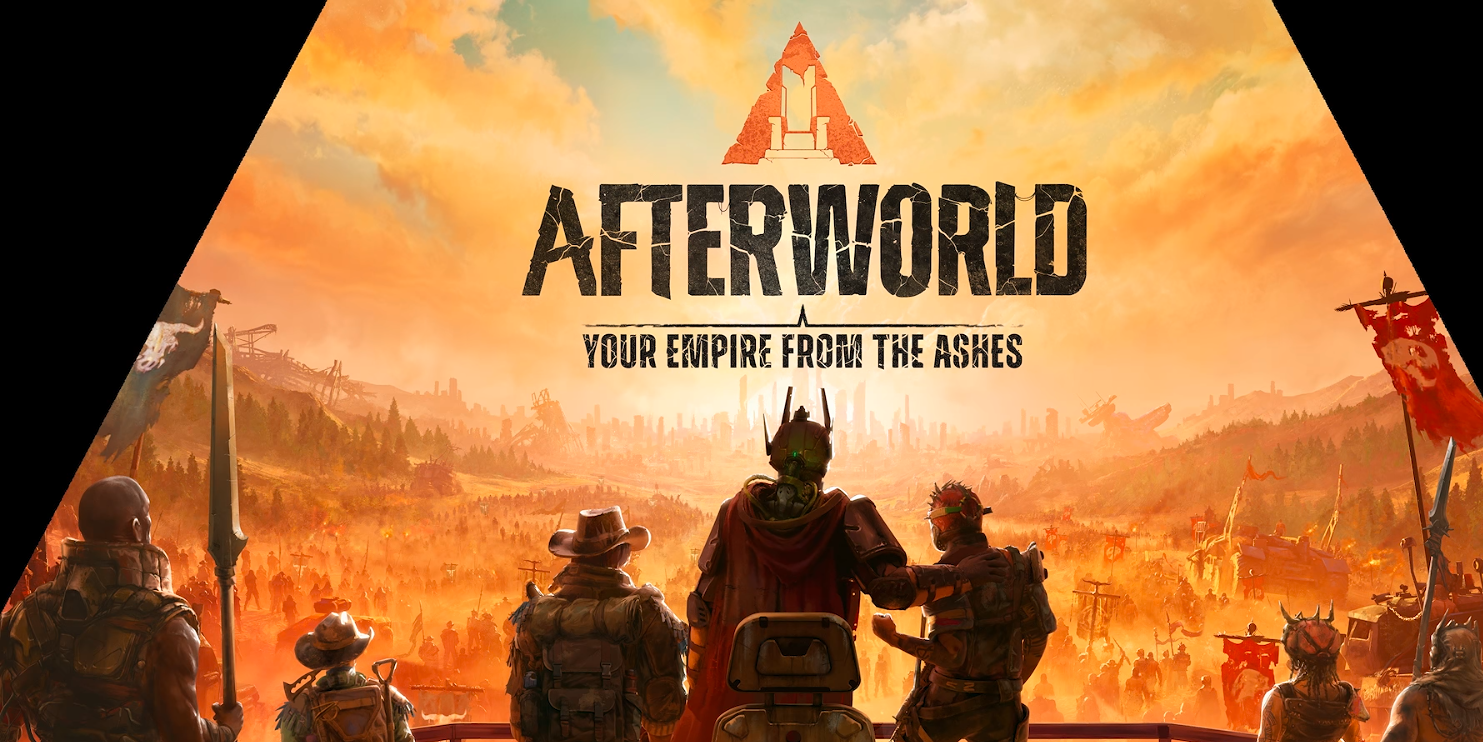
If you searched for the Afterworld game, you almost certainly want three things: what it actually is, when you can play it, and whether it’s worth a Wishlist slot. Here’s the short version. Afterworld is a brand-new post-apocalyptic grand strategy game from Paradox Development Studio the team behind Crusader Kings III and Hearts of Iron IV revealed at Gamescom Opening Night Live on August 25, 2026.
It is Paradox’s first original, non-historical setting in a decade. You start with a handful of survivors in a ruined North America and, if you play well, end with an empire that spans the continent. There is no release date yet.
This guide covers the confirmed gameplay systems, the playable origins, how Afterworld differs from Fallout and from Paradox’s own back catalogue, and what the leak before the announcement told us.
What Is the Afterworld Game?
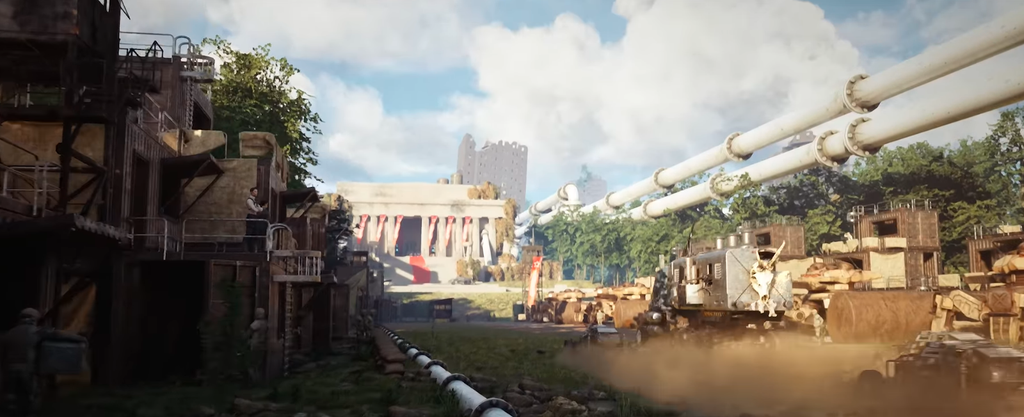
Afterworld is a grand strategy game set roughly a century after “The Fall,” a world-spanning apocalyptic war that happened in a technologically advanced future rather than our present day. That detail matters: the ruins you loot are not 1950s Americana but the wreckage of something more advanced than what exists now.
Paradox’s own framing is direct. Players lead a handful of survivors through hazardous terrain, dangerous old-world ruins and the desperate remnants of humanity on the path to building a continent-spanning empire.
The pitch is deliberately gentler at the start than a typical Paradox title. The experience shifts from a small-scale, approachable beginning into a grand strategy as rich and complex as fans expect from Paradox games closer to how Stellaris opens with a single homeworld than how Europa Universalis drops you into a live map.
Key facts at a glance:
- Developer: Paradox Development Studio
- Publisher: Paradox Interactive
- Game Director: Dan Lind, previously project lead on Hearts of Iron IV
- Platform: PC
- Genre tags: Grand strategy, 4X, post-apocalyptic, survival, political sim
- Modes: Single-player, online co-op, competitive multiplayer
- Release date: To be announced
Afterworld Release Date: What’s Confirmed
There is no Afterworld release date. The official Steam page lists the release as to be announced, with no announced beta or early access window either.
Some regional outlets have listed a 2026 window, but that appears to be placeholder data rather than a Paradox commitment. Given that dev diaries only began in late August 2026, a 2027 launch is the more realistic expectation. Paradox typically runs dev diaries for a year or more before shipping a new grand strategy title.
Wishlisting on Steam is currently the only way to get a launch notification.
Afterworld Gameplay: The Systems That Actually Matter
Four mechanics separate Afterworld from the crowded post-apocalyptic strategy shelf.
A Procedurally Generated North America
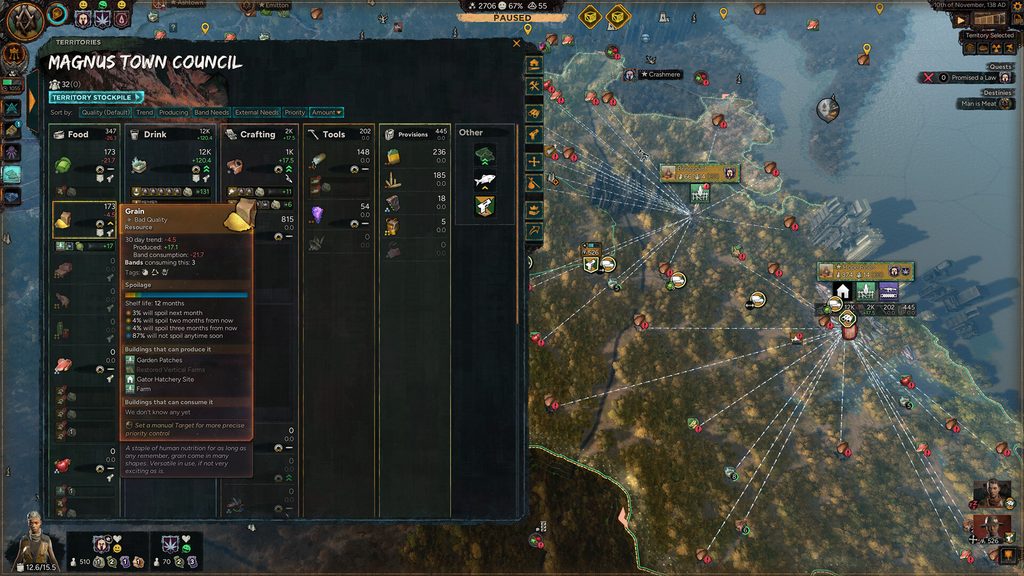
The map is not fixed. Afterworld starts players in a procedurally generated North American wasteland, creating a new strategic sandbox full of emergent stories in every playthrough.
The geography stays recognizable you will know roughly where you are but resources, rival tribes and threats shuffle each campaign. Paradox’s Elder Lore keeper described the approach as a handcrafted map painted with pre-Fall locations and terrain, which then warps as the studio simulates a semi-random apocalypse.
For a genre where players often memorise the optimal opening within three campaigns, that’s a meaningful replayability lever.
The Ideas Tree Replaces the Tech Tree
This is the standout system. Instead of a fixed research grid, Afterworld’s dynamic Ideas Tree unlocks advances based on what you actually find and experience encounter a river and learn irrigation, meet a new tribe and discover organized religion.
Progression is therefore a consequence of exploration, not a shopping list. Two players with identical origins can end up with radically different societies because they walked in different directions.
Law, Scarcity and Moral Crises
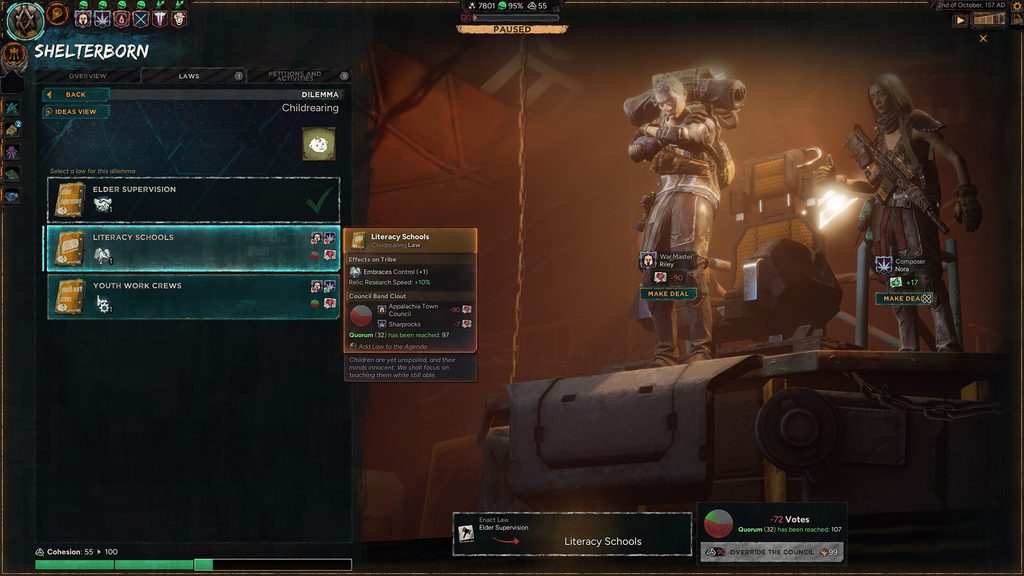
Afterworld leans hard into governance. You draft the laws of a new society: who receives scarce goods, who earns a voice in leadership, and what the nation stands for. New discoveries and crises constantly reshape your people’s demands.
The game also asks how your society treats the mutated and the augmented, how it handles emerging religions, and what gets rationed when supply fails. A food shortage can escalate into famine; a political misstep can fracture your nation.
The Ancients
Your primary antagonists are the Ancients immortal leaders from before the Fall, kept alive by forgotten technology, with their own vision of who should rule. Alongside them sit cultists and raider warlords. Pre-Fall relics exist that can rewrite what your nation is capable of, with the obvious caveat that the same power ended the last world.
Playable Origins and Factions
Afterworld opens with an origin choice that sets your starting conditions and cultural flavour. Confirmed examples:
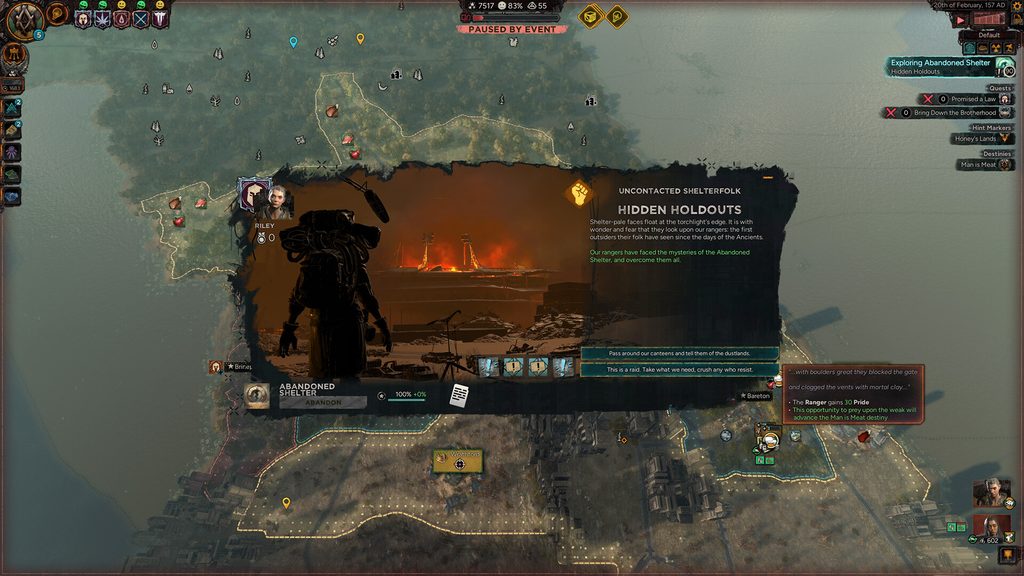
- Shelterfolk survivors crawling out of a failing nuclear bunker into a world they don’t understand
- Zealots wayward believers searching the dustlands for their goddess
- Several further origins not yet detailed
Origins are not cosmetic. They shape your starting knowledge, your relationship with neighbours, and which paths through the Ideas Tree open first.
Diplomacy runs in parallel: you can negotiate trade, absorb wandering bands into your nation, or take what you need by force. Paradox’s line is that other people are simultaneously your greatest resource and your greatest threat.
Is Afterworld Just Fallout as a Strategy Game?
The comparison is inevitable and only partly fair. Coverage has framed Afterworld as a cross between Fallout or Mad Max and Paradox’s grand strategy formula, and the shelterfolk origin invites it directly.
The differences are structural:
- Scale. Fallout is one wanderer; Afterworld is thousands of lives, supply lines and legislatures.
- Timeline. The Fall occurred in an advanced future, not a retro-futurist 1950s.
- Failure state. Afterworld is a survival strategy game first easy to learn, difficult to survive.
Within Paradox’s own catalogue, this is only the studio’s second fully original setting after Stellaris, and its first non-historical world in ten years.
The Leak That Spoiled the Reveal
Worth knowing because it’s a common follow-up search. Paradox’s own forum accidentally listed the unannounced name “Afterworld” in its Unreleased Games filter, and a Redditor then located the unreleased Discord server carrying the game’s description a day before the planned Gamescom debut. Some fans were also openly disappointed it wasn’t the fantasy grand strategy title they’d hoped for.
FAQ
What is the Afterworld game about?
Leading a tribe of survivors through post-apocalyptic North America a century after a global apocalyptic war, rebuilding from a single settlement into a continent-spanning empire while managing scarcity, law and rival factions.
When is the Afterworld release date?
Not announced. The Steam listing says “to be announced.” Based on Paradox’s typical dev diary cycle, 2027 is the realistic expectation.
Is Afterworld multiplayer?
Yes. The Steam listing confirms single-player, online co-op and competitive online PvP, plus Steam Workshop mod support and achievements.
What platforms will Afterworld be on?
PC only at announcement, with Windows, macOS and SteamOS/Linux listed. Full system requirements are still marked TBC.
Who is making Afterworld?
Paradox Development Studio, published by Paradox Interactive. Game director Dan Lind previously led Hearts of Iron IV.
Will Afterworld be beginner-friendly?
That’s the stated goal the studio has pitched it as its most approachable grand strategy game, starting small before scaling into full Paradox complexity.
The Bottom Line
Afterworld is the most interesting thing Paradox has announced in years: an original setting, a genuinely novel progression system in the Ideas Tree, and a procedural map that should keep campaigns from calcifying. The risk is the usual one a Paradox launch that ships thin and fills out over three years of DLC.
For now, the sensible move is to wishlist it on Steam and follow the dev diaries, which are where the real mechanical detail will surface.