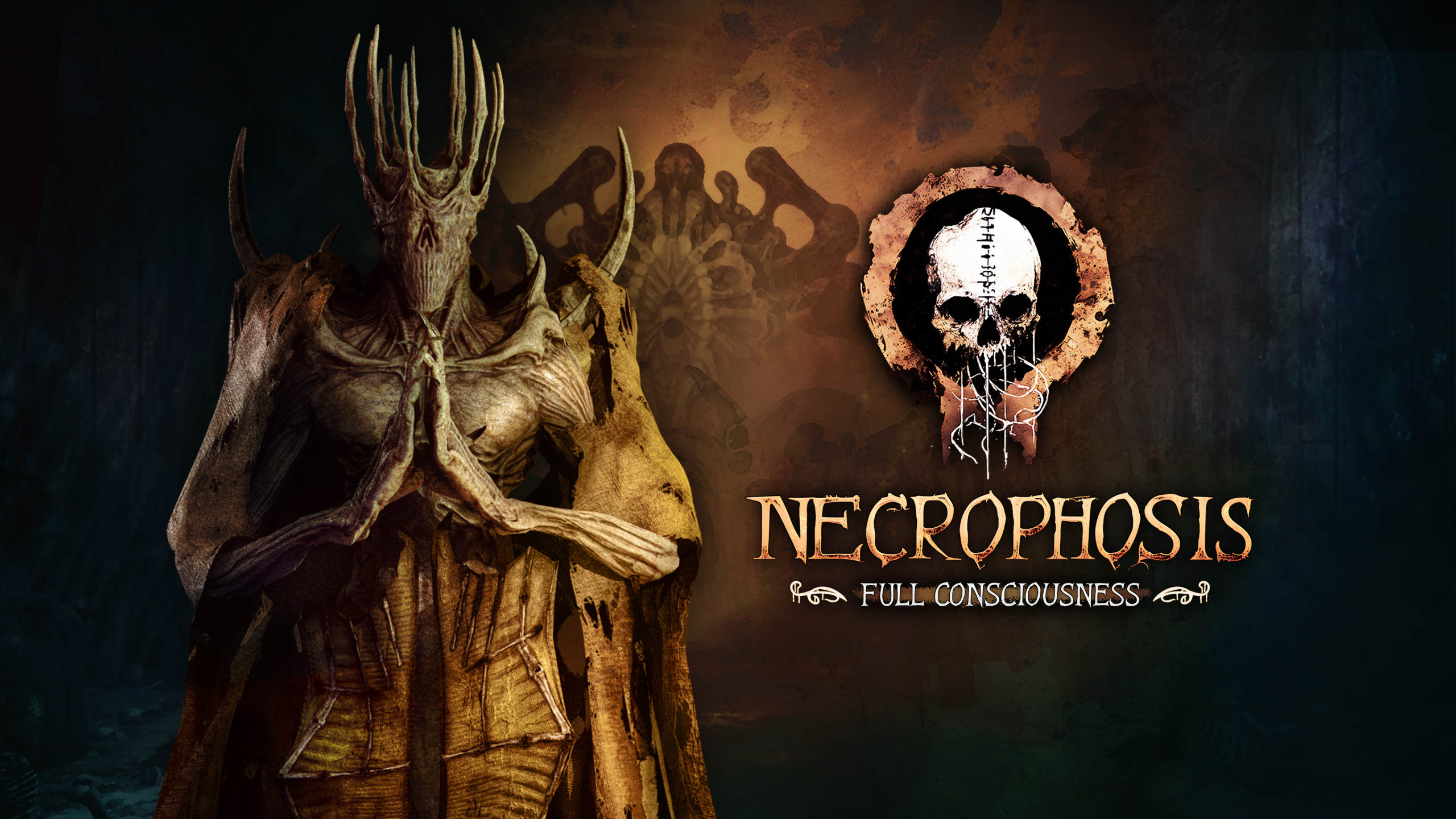
Necrophosis: Full Consciousness is an upcoming first-person psychological horror experience focused on symbolic exploration, environmental interpretation, and perception-based puzzle design.
Unlike traditional survival horror titles such as Amnesia or Outlast, the game reportedly removes combat systems entirely and emphasizes cognitive progression over physical survival.
⚠️ Important: As of current available public information (trailers and early listings), the game is still in pre-release/preview stage. Many mechanics below are based on official footage + developer-facing descriptions where available.
If you’re interested in detailed breakdowns of upcoming titles, you can also check out our 007 First Light gameplay analysis, which explores another game with a strong focus on systems and design.
Source-Based Evidence (Trailer & Official Material)
Trailer Observations
Based on publicly available trailer footage and promotional material:
Confirmed from Trailer:
- First-person exploration in surreal environments
- Heavy use of distorted architecture and symbolic imagery
- Absence of visible combat UI or weapon systems
- Environmental shifts triggered by progression moments
- Strong emphasis on audio-visual disorientation
Important Note:
These observations are derived from visual analysis of promotional footage, not full gameplay release.
Confirmed vs Rumored Features
Confirmed Information
These elements are consistently supported by official descriptions or trailer evidence:
Gameplay Structure
- First-person exploration gameplay
- Non-linear environmental navigation
- Puzzle-solving through observation
- No visible combat system
Core Design Philosophy
- Psychological horror focus
- Symbolic interpretation mechanics
- Minimal UI approach
World Design
- Fragmented, surreal environments
- Environment changes during progression moments
- Heavy use of spatial distortion
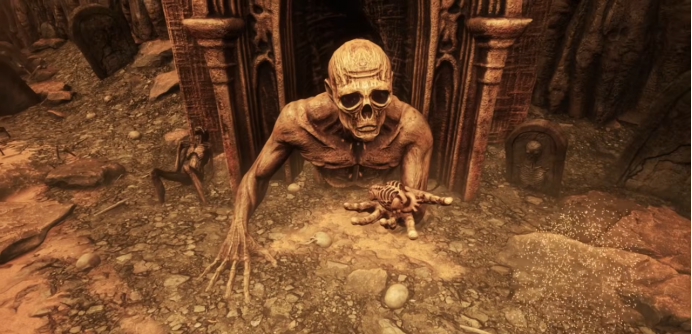
Lovecraftian Influence in Necrophosis
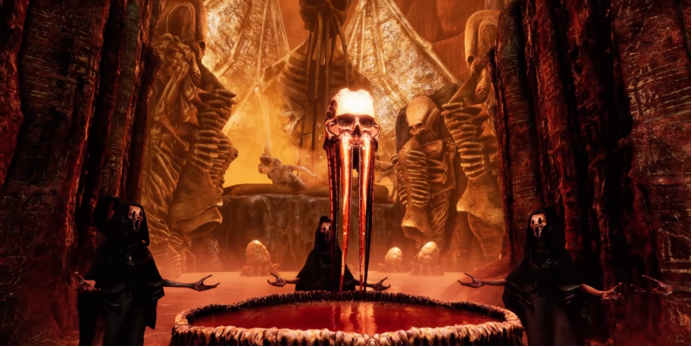
One of the most striking elements observed in Necrophosis: Full Consciousness is its clear Lovecraftian horror inspiration, especially during early environmental encounters that resemble the discovery of an “unknown entity presence” rather than a traditional enemy.
This is not explicitly labeled in official marketing, but visual language, environmental design, and thematic framing strongly align with Lovecraftian horror principles.
First Encounter With a Lovecraftian Presence
Based on trailer sequences and early gameplay previews, players appear to encounter a moment where:
- The environment shifts into non-Euclidean geometry
- Organic, almost “impossible” structures appear within architecture
- Visual forms resemble unknown biological or cosmic entities
- Audio becomes heavily distorted with layered, non-human tones
- The player is not told what the entity is — only that it is present
Rumored / Speculative
These are common interpretations across gaming previews but not officially confirmed:
- Reality is a mental construct
- Time loops or recursive space design
- Multiple endings based on interpretation depth
- Hidden narrative factions or lore systems
- Full cognitive “sanity system” mechanic
⚠️ These should be treated as community interpretation, not fact
Core Gameplay Loop
1. Exploration Phase
Players move through unstable environments where:
- Navigation is non-linear
- Landmarks shift visually
- Objectives are not explicitly marked
2. Interpretation Phase
Progress depends on:
- Symbol recognition
- Pattern repetition analysis
- Environmental storytelling interpretation
- Spatial reasoning
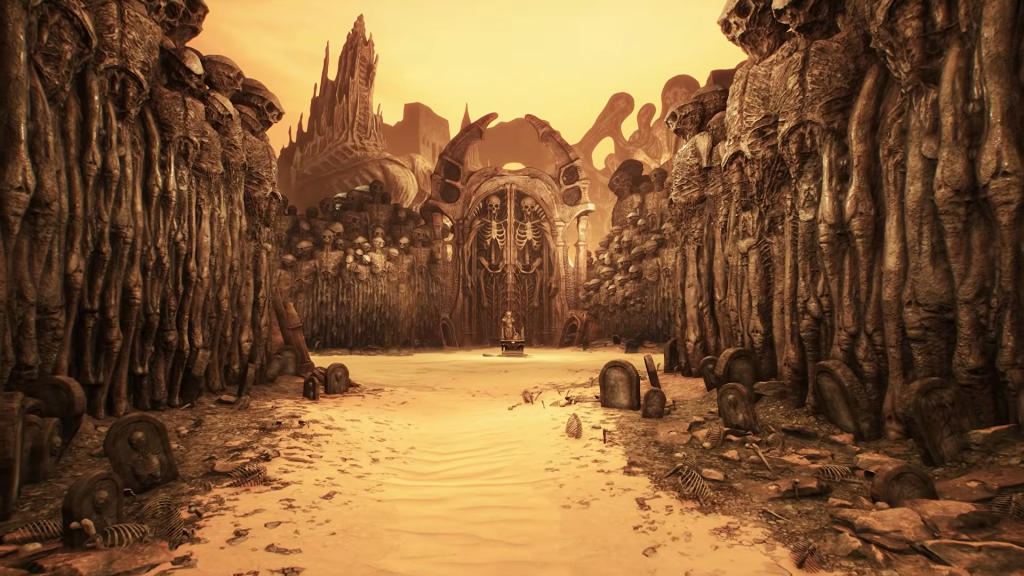
3. Reality Shift Phase
As understanding increases:
- Environments visually transform
- Audio becomes distorted or layered
- Spatial rules appear to change
- New pathways emerge dynamically
💡 Design Insight: This creates a knowledge-driven progression loop, uncommon in traditional horror design.
Gameplay Systems Deep Dive
Symbol-Based Puzzle System
Rather than traditional puzzle interfaces, challenges are embedded directly into the environment:
- Architecture functions as encoded language
- Visual repetition acts as hints
- Spatial arrangement replaces UI instructions
This aligns the game closer to interpretive puzzle experiences than traditional objective-based design.
Psychological Horror System
Horror is generated through perception distortion rather than threats:
- Audio phase shifting
- Environmental instability
- Sudden spatial inconsistencies
- Visual hallucination-like effects
Unlike games such as Outlast, fear is derived from uncertainty instead of pursuit mechanics.
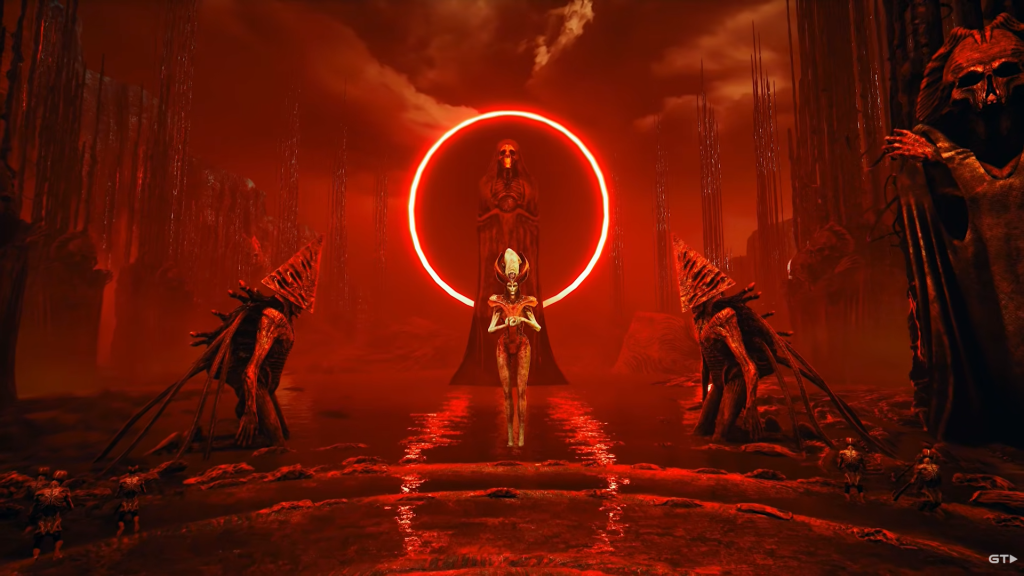
No Combat Design Philosophy
Confirmed Design Direction:
- No weapons shown in trailers
- No combat UI elements
- No enemy engagement systems observed
Impact on Gameplay:
- Removes survival pressure loops
- Shifts focus to cognitive problem-solving
- Encourages slow interpretive exploration
Unlike structured gameplay systems seen in 007 First Light, Necrophosis leans more into atmospheric exploration and psychological immersion.
Narrative Structure
Confirmed Narrative Elements
- Player begins without identity
- World appears fragmented or decayed
- Consciousness is a central theme
- Story is environmental, not cinematic
Community Interpretation Layer
- Player may represent fragmented cognition
- World may represent psychological reconstruction
- Ending may depend on perception “completion”
- Environment may function as memory architecture
Characters & Entities
Confirmed
- No named protagonist revealed
- No official NPC roster
- No confirmed faction system
Not Confirmed
- Enemy types or AI systems
- Dialogue-based character interactions
- Structured companion system
Multiplayer Status
Confirmed
- Single-player experience only
Not Confirmed
- Co-op mode
- PvP systems
- Online features
Release Date
Official Status
- No exact release date confirmed
Industry Estimates
- Some storefront listings suggest a 2026 release window, but this is not officially verified
System Requirements
⚠️ These are speculative baseline requirements, not developer-confirmed specs.
Minimum (Estimated)
- Windows 10
- i5-8400 / Ryzen 5 2600
- GTX 1060 / RX 580
- 8 GB RAM
Recommended (Estimated)
- Windows 11
- i7-9700K / Ryzen 5 5600
- RTX 2060 / RX 6600
- 16 GB RAM
- SSD recommended
What Makes Necrophosis Different?
Compared to psychological horror titles like:
- Amnesia: The Dark Descent
- SOMA
- Layers of Fear
Key Differentiators
1. No Survival Loop
Most horror games rely on:
- hiding
- running
- resource scarcity
Necrophosis removes all survival mechanics entirely.
2. Interpretation-Driven Progression
Instead of solving explicit puzzles:
- meaning must be inferred
- solutions are non-linear
- perception replaces instruction
3. Reactive World Design
The environment changes based on:
- player understanding
- symbolic recognition
- progression state
This creates a knowledge-responsive world system, rarely seen in the genre.
4. Cognitive Horror Model
Instead of jump scares:
- uncertainty drives fear
- perception instability replaces threats
- ambiguity replaces enemies
FAQ
Is Necrophosis: Full Consciousness open world?
No. It appears to use interconnected, non-linear zones rather than a fully open world.
Does the game have combat?
No combat systems have been shown or confirmed.
Is it multiplayer?
No, it is strictly single-player.
Are there multiple endings?
Not confirmed, but interpretation-driven horror games often include branching outcomes.
#Related Articles
– 007 First Light Gameplay Analysis
– LEGO Batman Legacy of the Dark Knight