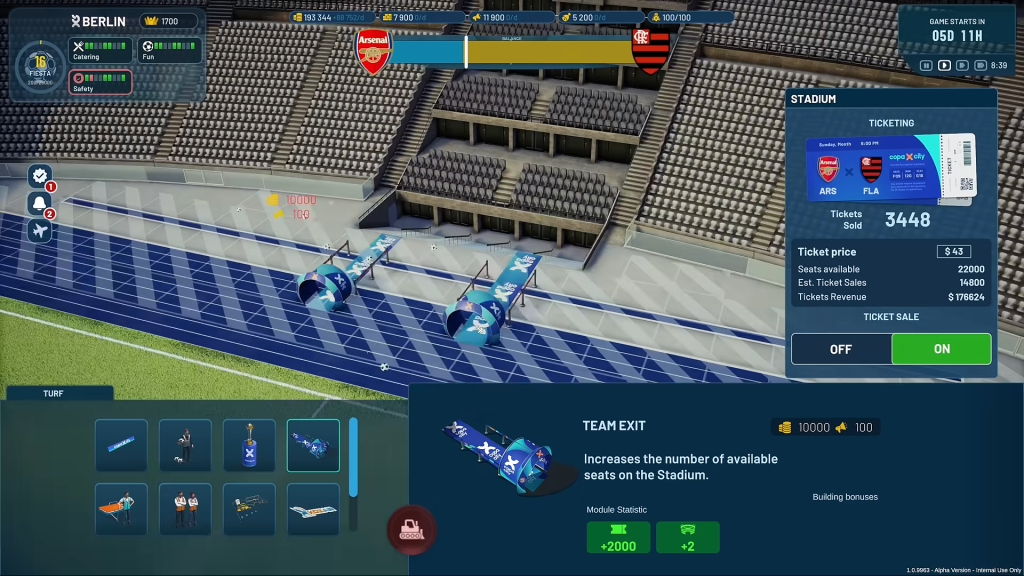
Copa City is an event-management and city-operations simulator built around major football match days.
Your responsibilities span transportation networks, entertainment zones, fan movement, security coverage, local businesses, infrastructure, and commercial revenue. The football match is the final stress test of everything you have built — not the game itself.
The Best Analogy
Copa City = Cities: Skylines meets a live football festival. That comparison is far more accurate. You are building and managing an urban environment that must perform under extreme pressure on match day.
| Feature | Copa City | Football Manager |
|---|---|---|
| Primary focus | City & event logistics | Team tactics & transfers |
| Main resource | Fan satisfaction + money | Budget + reputation |
| Core challenge | Managing thousands of people | Managing 11–25 players |
| Match day role | Infrastructure host | Tactical coach |
| Closest genre | City builder / sim | Sports management |
The real challenge of Copa City is rarely explained: you are managing thousands of people who all want different things at the same time. That is the game. Everything else is a tool to help you do it.
While very different in genre, major releases like the God of War Trilogy Remake are also attracting players looking to master complex gameplay systems.
Beginner Tips
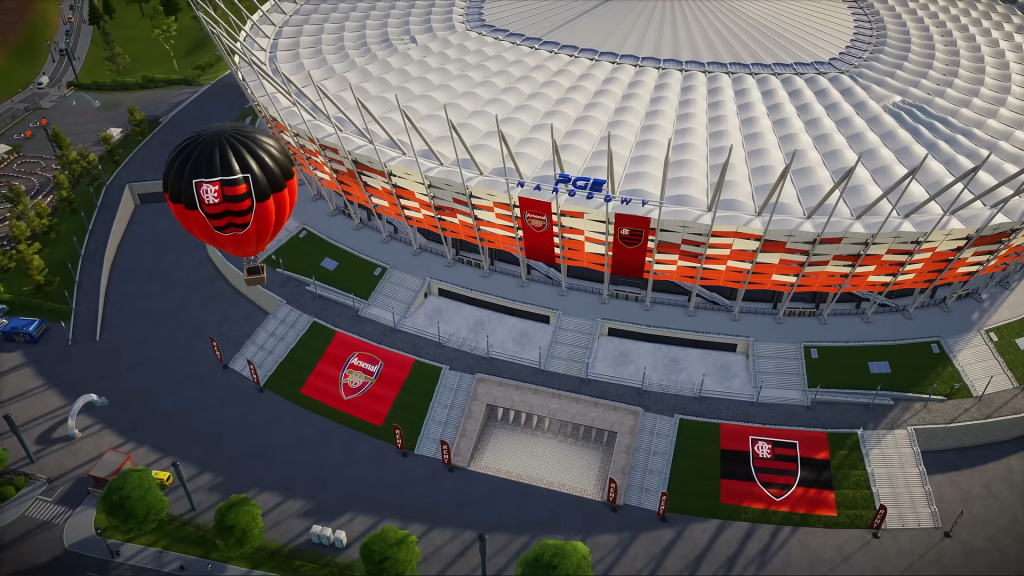
Most players spend their first hours building the biggest stadium they can afford. That is almost always a mistake. Here is what you should actually understand before your first event.
The City Beats the Stadium
The match lasts 90 minutes. Fan experience starts hours earlier. Invest in the city first.
Traffic Is a Hidden Enemy
Congestion destroys satisfaction ratings silently. One bottleneck cascades into every other system.
Fan Happiness Affects Everything
Revenue, reputation, and future attendance are all downstream of satisfaction scores.
Avoid Early Overspending
Expanding before your systems are efficient locks in expensive problems at larger scale.
Study Crowd Flow Patterns
Watch where fans naturally move before placing any services. Flow reveals infrastructure needs.
Build Multiple Entry Routes
A single entrance guarantees bottlenecks. Distribute arrival pressure across several access points.
Balance Services Carefully
Too many services waste budget. Too few generate complaints. Match coverage to crowd density maps.
Think Beyond Kickoff
Fans arrive early, linger, and leave. Your city must function across the entire match-day window.
Monitor Tourism Income
Visiting fans generate ancillary revenue if you create reasons to explore the wider city.
Efficiency Beats Raw Size
The best city in Copa City is never the biggest. It is the one that wastes nothing.
Event Planning
How Event Planning Actually Works
Every match day begins long before anyone enters a turnstile. The game requires you to prepare five interconnected systems before kickoff. Weakness in any one of them ripples outward.
The Five Pre-Match Systems
- Fan Zones — Entertainment hubs that distribute crowd pressure, increase dwell time, and unlock revenue opportunities. Not decorative. Structural.
- Food & Commercial Areas — Revenue-generating locations that must be positioned along natural crowd paths, not placed arbitrarily on the map.
- Transportation Networks — The system everything else depends on. Routes must handle pre-match surges, half-time movement, and post-match exits simultaneously.
- Security Coverage — Both a safety layer and an operational stabilizer. Gaps in coverage create complaint chains that damage your satisfaction score.
- Public Services — Facilities that support crowd comfort. Undersupply creates friction. The goal is invisible adequacy, not visible excess.
What Most Guides Get Wrong About Fan Zones
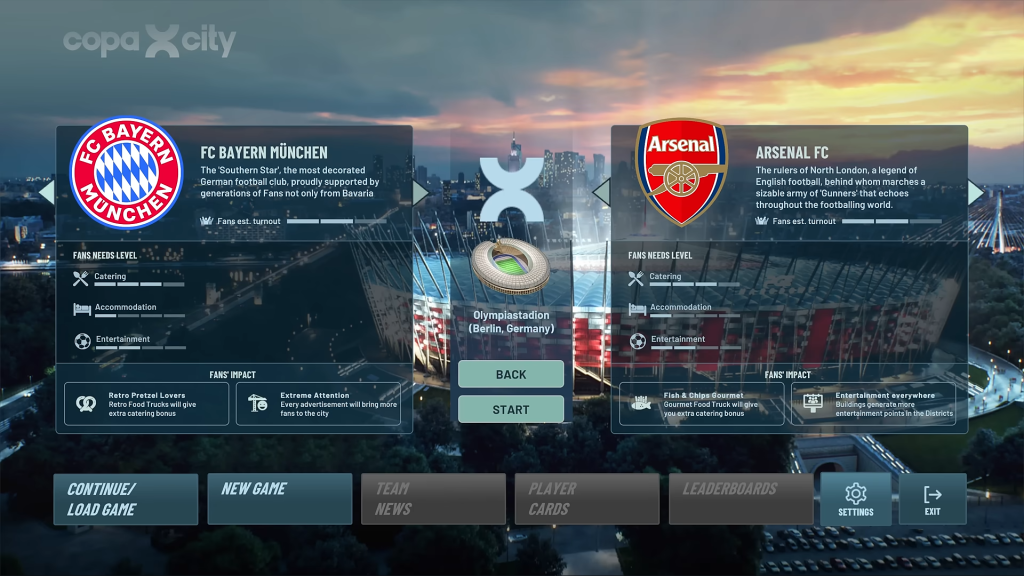
Almost every Copa City preview treats fan zones as cosmetic — a way to make your city look lively. That misunderstands their function entirely. Fan zones are pressure-release systems. By drawing visitors away from the stadium perimeter before gates open, they reduce dangerous crowd density while simultaneously generating commercial revenue. A well-placed fan zone does three jobs at once: entertainment, crowd management, and income generation.
Core Systems
Fan Satisfaction — The Second Currency
Most city-builder games give you one primary resource: money. Copa City gives you two. The second one — fan satisfaction — is arguably more important, and almost every guide ignores it.
What Fans Actually Evaluate
- Travel convenience — How easy was it to reach the venue from entry points across the city?
- Waiting times — Queue lengths at gates, food stalls, and transport hubs directly hit satisfaction scores.
- Safety — Perceived security coverage affects enjoyment even when no incidents occur.
- Amenities quality — The quality of food, facilities, and rest areas, not just their quantity.
- Entertainment access — Proximity to fan zones and pre-match activities before gates open.
- Accessibility — Route clarity and ease of navigation across your city layout.
Players looking for a more action-focused experience may also enjoy Killer Bean, which emphasizes fast-paced gameplay and quick decision-making.
Revenue Strategy
The most common misconception in Copa City is simple: more visitors equals more profit. It does not. This misunderstanding causes players to scale too fast, create overcrowding, and watch their profit margins collapse despite record attendance.
What Large Crowds Actually Cost
- Higher operating costs — Every additional fan increases service demand across the board.
- Increased security spending — Larger crowds require proportionally more security coverage.
- Transportation pressure — Surge capacity requirements spike infrastructure costs.
- Service demand peaks — Food, facilities, and staff requirements all rise with crowd size.
City Logistics
Logistics — The Deepest System in the Game
If fan satisfaction is the second currency, logistics is the engine that produces it. Every other system — revenue, security, entertainment — depends on whether people can move efficiently through your city.
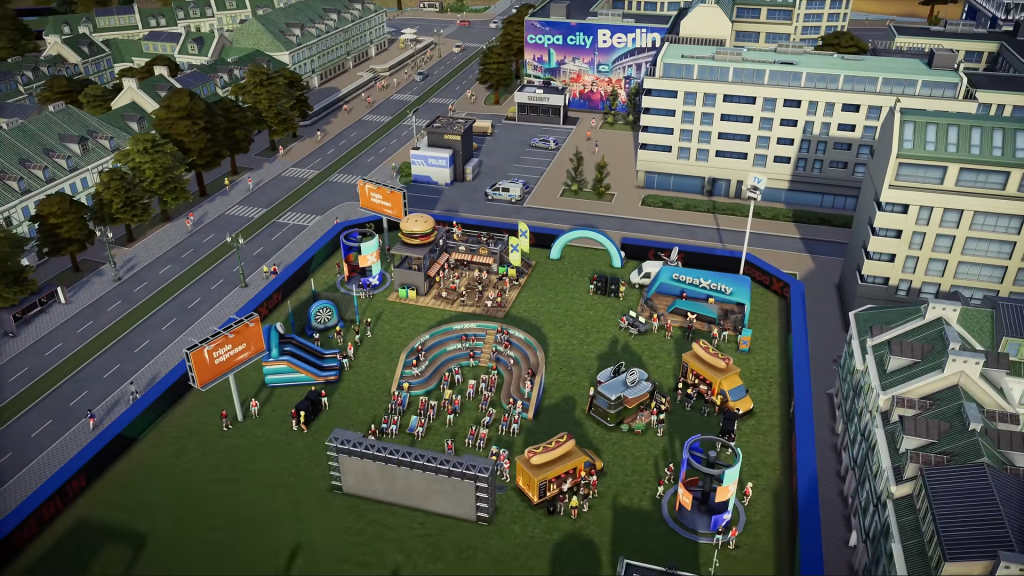
The Four Phases of Match-Day Movement
Arrival Planning
How fans enter the city from transport hubs, parking, and pedestrian routes. Multiple entry points prevent the early congestion that cascades through every subsequent phase.
Movement Planning
How fans navigate from entry points to fan zones, food areas, and the stadium. Route clarity reduces friction. Confusion slows movement and creates unexpected crowd clusters.
Stadium Access
How crowds reach turnstiles on time without creating dangerous density around entry gates. Gate count and distribution matter as much as overall infrastructure capacity.
Exit Management
How crowds leave after the final whistle. This phase is consistently the most underplanned — and often the most punishing. A city that functions perfectly before kickoff can collapse in the post-match exit window.
Hidden Mechanics Most Players Never Find
Copa City contains several systems that operate in the background without clear UI indicators. Players who discover them early gain a substantial strategic advantage.
- Crowd density thresholds
- Tourist spending patterns
- Service coverage efficiency
- Event timing optimization
- Transportation bottleneck scoring
- Fan-zone synergy effects
- Reputation growth compounding
- Emergency response impact ratings
The Best Early Game Strategy — Step by Step
This is the sequence that experienced players consistently recommend. It deliberately delays stadium expansion in favor of operational efficiency — the opposite of most players’ instincts.
Build Transportation First
Before placing any entertainment or commercial facilities, establish your transport backbone. Every other system depends on movement. Getting this wrong first means getting everything wrong.
Create Small Fan Zones
Start with modest fan zones positioned at crowd chokepoints. They do not need to be elaborate — they need to intercept foot traffic and redirect it productively.
Monitor Crowd Paths
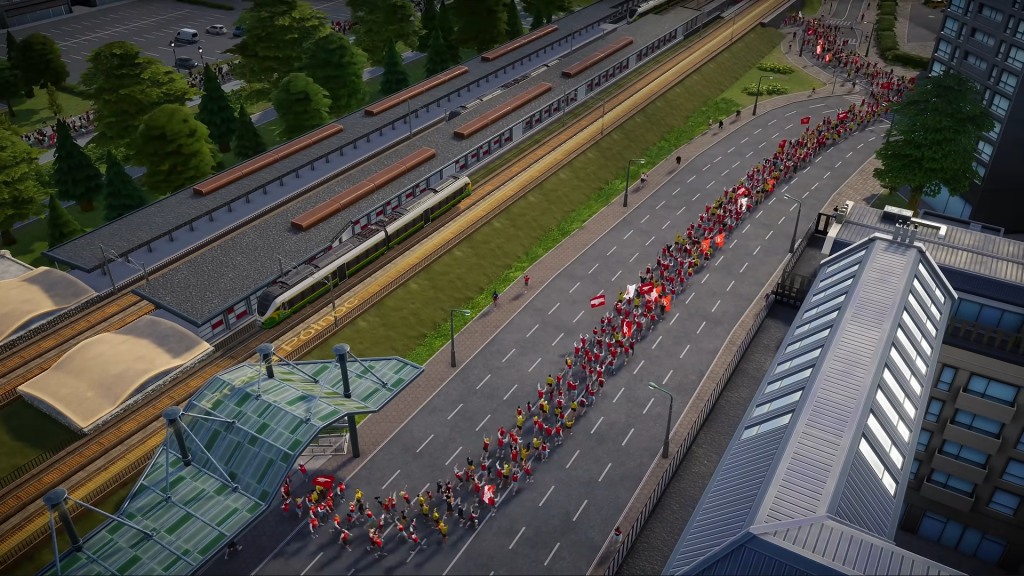
After your first event, study where fans actually moved versus where you expected them to move. These two things are almost never the same. Let observation inform your second-event improvements.
Expand Commercial Areas Gradually
Place food and commercial zones along proven crowd paths — not theoretical routes. Revenue follows real movement, not planned movement.
Invest in Satisfaction Improvements
Once your infrastructure is stable, reinvest revenue into satisfaction-improving upgrades. This is what unlocks reputation growth and access to larger events.
Optimize Before Scaling
Do not expand capacity until your current setup runs efficiently. Scaling an inefficient system creates an expensive, hard-to-fix large-scale version of your original problem.
FAQ
Is Copa City a football management game?
No — not in the traditional sense. You manage the event infrastructure and city operations surrounding football matches, not team tactics or player transfers.
when does copa city come out?
Copa City is scheduled to release on June 16, 2026, for PC, PlayStation 5, and Xbox Series X|S.
Can you control football teams or players?
No. Copa City’s focus is entirely on event planning, city logistics, and fan experiences. You are an event operator, not a football manager.
What is the actual win condition in Copa City?
Maximizing positive fan experiences while minimizing operational failures. In practice this means balancing transportation, entertainment, security, spending, infrastructure, and timing simultaneously.
Does transportation really matter that much?
Yes — it is probably the most critical single system in the game. Every other system (fan satisfaction, revenue, security effectiveness) depends on whether people can move efficiently.
What is the hardest part of Copa City?
Balancing multiple interconnected systems simultaneously during major events. Specifically, post-match crowd exits are consistently harder than pre-match arrivals — arrivals happen over hours; exits happen in minutes. Players who plan beautifully for kickoff but ignore the final whistle are regularly caught off-guard.
Another highly anticipated release is Avatar Legends: The Fighting Game, which has already generated significant interest among competitive players.
The Bottom Line
The biggest mistake is treating Copa City like a football game. The football match is simply the event that stress-tests everything you have built. Success belongs to players who master logistics, crowd psychology, and operational efficiency — not stadium size.
Logistics over aesthetics Efficiency over scale Satisfaction as currency Flow over capacity Plan exits, not just arrivals.
#Related Articles
– God of War Trilogy Remake Guide: Everything We Know
– Killer Bean
– Avatar Legends: The Fighting Game