A full, structured walkthrough for Resident Evil Requiem focused on preventing permanent mistakes, optimizing routes, and understanding how hidden systems affect progression, weapons, NPC survival, and endings. This guide is designed for players who want a safe first playthrough, full completion awareness, and efficient resource management.
Unlike basic step-by-step walkthroughs, this guide explains why choices matter, what triggers permanent locks, and how to avoid missing critical content.

If you’re coming from previous entries in the series, you can also check out our Resident Evil 4 survival horror guide, which explores one of the most influential action-horror experiences in the franchise.
Core Gameplay Systems You Must Understand First
Resource Economy & Drop Behavior
Resident Evil Requiem uses a dynamic resource balancing system that affects survival efficiency.
Across repeated gameplay patterns, the following behaviors are consistently observed:
- Ammo scarcity increases if the player hoards unused resources
- Leg-based stagger strategies are more resource-efficient than headshot spam
- Melee execution after stagger often yields better post-combat recovery drops
- Early crafting of ammo may lead to shortages in mid-game lab sections
Best practice:
Prioritize survivability upgrades and controlled ammo use, not early crafting spam.
Combat Efficiency System
Combat is designed around efficiency, not speed.
Key insights:
- Boss encounters do not significantly shorten with high damage bursts
- Ammo waste in early phases creates late-game scarcity
- Stagger mechanics are more valuable than raw DPS
Optimal Combat Loop:
- Leg shot to trigger stagger
- Melee execution window
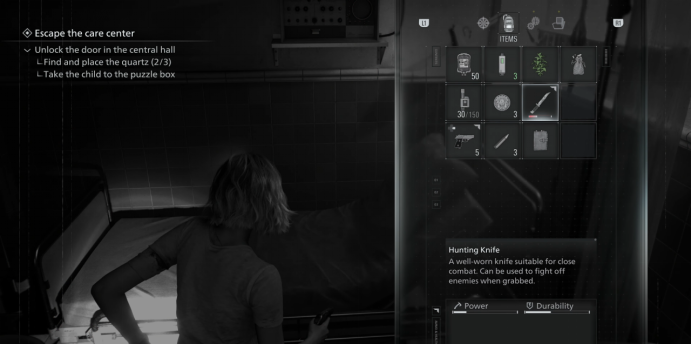
- Knife finish for efficiency
This loop consistently reduces ammo consumption while maintaining control.
Fail States & Permanent Missables
Resident Evil Requiem contains multiple permanent progression locks tied to puzzle interactions and environmental triggers.
Puzzle Item Locking System
Certain items permanently change map states:
- Fuse activation can trigger enemy escalation waves and lock exploration routes
- Valve interactions may remove stealth traversal paths
- Environmental destruction (burning doors, blocked passages) permanently removes alternate routes
Rule of thumb:
Fully explore all connected areas before interacting with major puzzle items.

NPC SURVIVAL SYSTEM
NPC survival directly affects:
- Weapon unlocks
- Ending type
- Shortcut access
- Available upgrades
These are not cosmetic choices — they permanently change progression.
Example: Injured Guard Event
Give Medkit
- NPC survives
- Unlocks shotgun variant
- Opens shortcut corridor
- Improves endgame outcome
Delay Decision
- NPC dies after area transition
- Shotgun becomes permanently unavailable
Ignore
- Immediate death flag
- Negative impact on ending classification
Best outcome: Immediate medkit use
CHAPTER 1 – ABANDONED FACILITY WALKTHROUGH
Objective: Restore Power & Unlock Lower Exit
Recommended Route Flow:
- Exit starting corridor
- Explore Storage Wing first (best loot consistency)
- Collect Incident Logs (ending-related flags)
- Obtain Extended Handgun Magazine BEFORE fuse interaction
- Rescue injured NPC before triggering system escalation
Fuse System Behavior
The fuse mechanism acts as a progression trigger, not just a puzzle.
Observed effects:
- Activating fuse triggers increased enemy spawns
- Certain loot rooms become locked afterward
- Early placement reduces exploration freedom
Safe Strategy:
Complete all side rooms → rescue NPC → collect items → THEN activate fuse
CHAPTER 2 – FLOODED MAINTENANCE WING
This section contains some of the highest concentration of missables in the game.
Water Level System
The environment changes based on water level:
- High water: stealth routes active, restricted movement
- Mid water: balanced access (optimal exploration state)
- Full drainage: permanent route closures
Critical rule:
Do NOT fully drain water before exploring optional paths.
Silent SMG Acquisition
Required Condition:
Water must remain at mid-level state
Route:
- Enter under-catwalk section
- Crawl through broken pipe passage
- Retrieve SMG from crate spawn zone
If water is fully drained:
This weapon becomes permanently inaccessible.
Technician NPC Branch
This NPC significantly affects mid-to-late game progression.
Save Technician
- Unlocks Magnum later
- Opens shortcut between lab zones
- Improves final ending conditions
Ignore/Fail Rescue
- NPC death flag triggers
- Magnum weapon becomes unavailable
- Ending path downgraded
Point of No Return #1 – Cargo Lift Activation
Activating the Cargo Lift locks:
- Flooded wing exploration
- SMG acquisition path
- NPC rescue opportunities
Recommendation:
Finish all exploration before activating the lift.
CHAPTER 3 – LABORATORY SYSTEM
Chemical Puzzle Logic
The lab puzzle follows a consistent sequence pattern:
Blue → Yellow → Red
Function Breakdown:
- Blue: stabilizes compound state
- Yellow: triggers reaction phase
- Red: completes synthesis
Incorrect sequencing results in:
- Hazardous corridor states
- Temporary navigation restrictions
- Forced reattempt loops
Magnum Weapon Unlock
The Magnum is a survival-route exclusive weapon.
Requirements:
- Technician must survive
- Safe Room B access unlocked
- Weapon case trigger activated
Failure in earlier NPC paths permanently removes access.
Point of No Return #2 – Helipad Elevator
This is the final major lock event.
Once activated, it prevents:
- Backtracking to lab zones
- Remaining collectible recovery
- Alternate ending flag completion
ENDINGS SYSTEM
Resident Evil Requiem uses a state-based ending system, not a single branching choice.
Best Ending Requirements
- Guard survives
- Technician survives
- SMG obtained
- Magnum obtained
- All key logs collected
- No NPC abandonment flags
While this game blends survival horror with modern mechanics, titles like Resident Evil 4 focus more on action-driven combat and resource management within a linear structure.
Bad Ending Conditions
- Any NPC death flag
- Missed critical progression items
- Locked exploration zones not completed
Secret Ending (Optional Path)
Requires:
- Full collectible completion
- Hidden terminal activation
- Optional rescue conditions fulfilled

MISSABLES CHECKLIST
Chapter 1
- Extended Magazine (pre-fuse only)
- Incident Logs (ending flags)
- Guard survival event
Chapter 2
- Silent SMG (water-level dependent)
- Technician survival flag
- Flood corridor key item
Chapter 3
- Magnum weapon
- Lab terminal logs
- Armor upgrade module
OPTIMAL SPEEDRUN ROUTE
A streamlined completion path prioritizing efficiency:
- Skip optional NPC rescue (risk trade-off)
- Avoid full exploration zones
- Use stagger → melee combat loop exclusively
- Minimal crafting and backtracking
Estimated completion: 2.5–3 hours (skilled run)
FAQ
Can you permanently miss weapons in Resident Evil Requiem?
Yes. Several weapons are locked behind NPC survival states and environmental progression triggers that cannot be reversed after certain chapter transitions.
What is the best route in Resident Evil Requiem?
The best route prioritizes full exploration before triggering major state changes like fuse activation, water drainage, or elevator progression events.
What are the points of no return?
The two major PONR events are Cargo Lift activation and Helipad Elevator ascent. Both permanently lock earlier zones and collectibles.
Do NPCs affect the ending?
Yes. NPC survival directly influences weapon access, shortcut availability, and final ending classification.
#Related Resident Evil Guides
– Resident Evil 4 Survival Horror Guide